Car Roof Types — A Complete Taxonomy
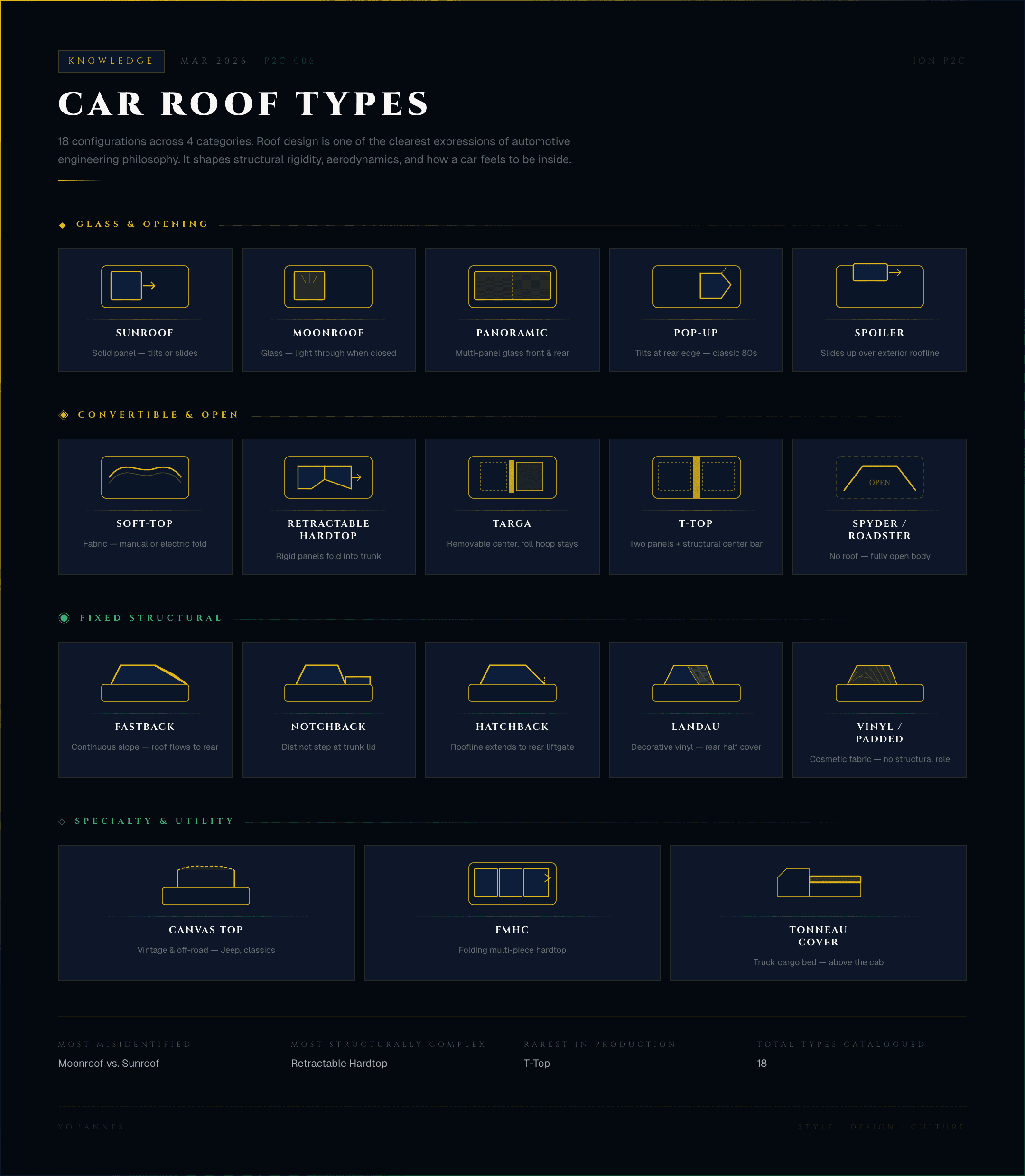
Most people know sunroofs. Few know what separates a moonroof from a panoramic, or why a Targa is structurally different from a T-top. Roof design is one of the clearest expressions of automotive engineering philosophy. It shapes structural rigidity, aerodynamics, weather protection, and how a car feels to be inside. Glass & Opening Roofs go beyond the basic sunroof. A sunroof is a solid metal or glass panel that tilts or slides; a moonroof is always glass and lets light through even when closed. Panoramic versions extend glass coverage across both front and rear seating. Pop-up sunroofs (common on 80s cars) tilt only at the rear edge. Spoiler sunroofs slide up and back over the exterior roofline. Convertible roofs are where engineering gets interesting. A soft-top is fabric that folds manually or electrically. A retractable hardtop (RHT) uses rigid panels that fold into the trunk, better NVH and security than fabric, but it eats cargo space. The Targa roof removes only the center section, leaving a structural roll hoop. Porsche’s solution to mid-70s US rollover regulations. The T-top (popularized by the C3 Corvette and IROC-Z) removes two panels flanking a central structural bar. Spyder and roadster configs have no roof at all. Fixed roofs tell the story of a car’s silhouette. A fastback flows continuously from roof to rear. A notchback has a distinct horizontal trunk lid step. A hatchback extends the roofline to a rear liftgate door. Landau and vinyl padded roofs are cosmetic: fabric over metal that signals luxury, popularized in the 70s on cars like the Cadillac DeVille. Specialty configs include canvas tops common on vintage cars and Jeeps, folding multi-piece hardtops (FMHC), and truck tonneau covers which close off the cargo bed above the cab.